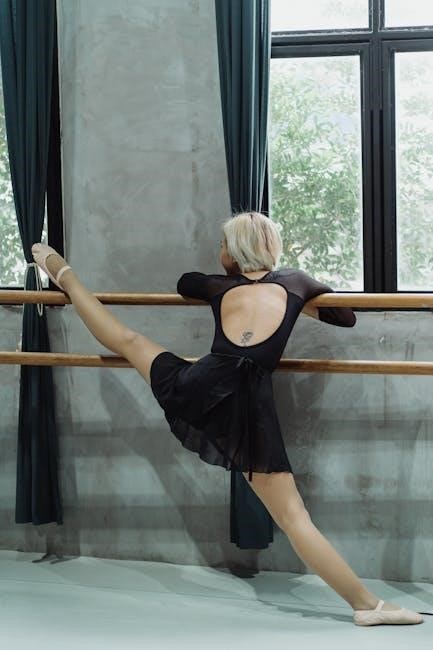
Ballet barre exercises, originating in the 1950s with Lotte Berk, blend ballet principles with Pilates, yoga, and strength training.
These low-impact, full-body workouts focus on small, isometric movements, building strength and enhancing flexibility.
Barre has surged in popularity, offering a graceful yet challenging path to fitness, sculpting lean muscle and improving balance.
What is a Ballet Barre Workout?
A Ballet Barre Workout is a fitness regimen inspired by the foundational movements of ballet, but adapted for a broader audience and performed with the support of a barre – a stationary handrail. Unlike traditional ballet classes focused on artistry and performance, barre workouts prioritize physical conditioning, targeting specific muscle groups with high repetitions and small, controlled movements.
These workouts aren’t about learning choreography; they’re about utilizing ballet-inspired techniques to build strength, improve posture, and increase flexibility. Core engagement is paramount, and exercises often incorporate elements from Pilates, yoga, and traditional strength training. Expect a focus on the legs, glutes, core, and arms, with an emphasis on isometric holds and precise form.
The barre provides stability, allowing participants to focus on muscle control and endurance. While seemingly gentle, barre workouts are incredibly challenging, leading to muscle fatigue and a noticeable burn. They are considered low-impact, making them accessible to various fitness levels and minimizing stress on the joints.
The History of Barre Workouts (Lotte Berk)
The origins of barre workouts can be traced back to the 1950s and a German ballerina named Lotte Berk. While recovering from a back injury, Berk combined her ballet training with rehabilitative exercises, developing a unique method to strengthen her body without further strain. This innovative approach formed the basis of what would become the first barre workout.
Berk opened a studio in London, attracting a clientele that included dancers, actors, and those seeking a low-impact fitness solution. Her technique focused on isometric exercises, holding positions to fatigue the muscles, combined with ballet-inspired movements performed at the barre. The emphasis was on precise form and controlled movements, rather than large ranges of motion.
Though initially popular in Europe, barre gained significant traction in the United States decades later. In the 2000s, studios like Barre3 and Pure Barre emerged, popularizing and adapting Berk’s original method for a wider audience. Today, barre continues to evolve, but its core principles – rooted in ballet and focused on mindful movement – remain a testament to Lotte Berk’s pioneering vision.
Fundamental Barre Exercises
Essential barre exercises – pliés, tendus, degagés, rond de jambes, and fondus – form the foundation of a barre workout, building strength and technique.
Pliés: The Foundation
Pliés, French for “bent,” are arguably the most fundamental movement in ballet and, consequently, barre workouts. Often described as the “squats of the ballet world,” pliés aren’t simply about bending the knees; they’re about maintaining proper alignment throughout the entire body.
There are two primary types of pliés: demi-plié (half bend) and grand plié (full bend). Both are performed in all five ballet positions, emphasizing turnout from the hips and a straight back. The core is engaged to support the spine, and the weight is distributed evenly across the feet.
Pliés build strength in the legs, ankles, and feet, while simultaneously improving flexibility and coordination. They also enhance posture and body awareness. Mastering the plié is crucial as it underpins nearly every other barre exercise, providing the necessary stability and control for more complex movements. Correct form is paramount to avoid injury and maximize benefits.
Tendus: Extending the Foot
Tendus, meaning “stretched” in French, are a cornerstone of barre work, focusing on lengthening and strengthening the legs and feet. This exercise involves sliding the foot along the floor, maintaining a pointed toe and a fully stretched leg, without lifting it. The movement originates from the hip, not just the knee.
Tendus are typically performed in all five ballet positions, both à la seconde (to the side) and en avant (forward). Emphasis is placed on maintaining turnout, a straight spine, and a stable core. The supporting leg remains engaged, providing balance and control.
Beyond leg strength, tendus improve articulation of the foot, enhance coordination, and refine technique. They also promote awareness of proper alignment and encourage a graceful, elongated line. Focusing on precision and control during tendus builds a strong foundation for more advanced ballet movements.
Degagés: Disengaged Movements
Degagés, translating to “disengaged” in French, build upon the foundation of tendus, demanding greater precision and control. Unlike tendus where the foot slides along the floor, in a dégagé, the foot lifts slightly off the ground, maintaining a pointed toe and a stretched leg. The movement still originates from the hip, emphasizing turnout and core engagement.
Degagés are executed in all five ballet positions, both à la seconde and en avant, focusing on a swift, brushing motion. The height of the lift is relatively small, prioritizing clean lines and a strong, stable supporting leg. Maintaining a consistent height and precise foot articulation are key.
This exercise strengthens the feet, ankles, and legs, while simultaneously improving coordination and balance. Degagés refine technique, enhance musicality, and prepare the dancer for more complex movements requiring quick, controlled leg extensions.
Rond de Jambes à Terre: Circles on the Ground
Rond de Jambes à Terre, meaning “circles of the leg on the ground” in French, is a fundamental barre exercise focusing on hip mobility and leg control. Performed with the foot remaining in contact with the floor, the leg traces a semi-circular path, initiating from the hip joint. Maintaining turnout throughout the movement is crucial, requiring consistent engagement of the deep rotator muscles.
These circles are executed both forward (en dehors) and backward (en dedans), emphasizing a smooth, continuous motion. The supporting leg remains stable and slightly bent, providing a solid base. The focus isn’t on the height of the leg, but on the quality of the circular movement and maintaining proper alignment;
Rond de Jambes à Terre improves hip flexibility, strengthens the legs, and enhances coordination. It’s a foundational exercise for developing the control and range of motion necessary for more advanced ballet steps.
Fondus: Melting Movements
Fondus, translating to “melting” in French, are a graceful barre exercise designed to build strength and articulation in the ankles and feet, while simultaneously enhancing plié technique. The movement involves a smooth, controlled bending and straightening of the knees (plié) accompanied by a simultaneous rising and lowering of the heels.
The essence of a fondu lies in the seamless coordination between the plié and the relevé (rising onto the balls of the feet). As the knees bend, the heels lower, and as the knees straighten, the heels rise. Maintaining a stable upper body and consistent turnout is paramount.
Fondus improve ankle strength, develop coordination, and refine the dancer’s ability to transition smoothly between plié and relevé. They are a vital component of barre work, preparing the legs for more complex movements.
Intermediate Barre Exercises
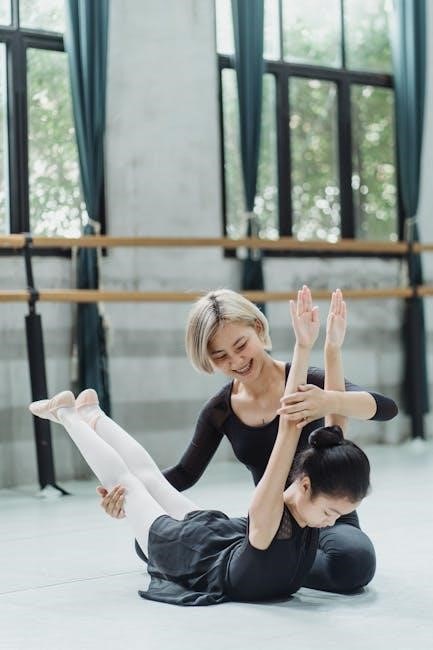
Intermediate barre exercises build upon foundational movements, demanding greater control, strength, and flexibility.
These exercises, like Adagio and Développés, refine technique and prepare dancers for more advanced choreography.
Adagio: Slow and Controlled Movements
Adagio, meaning “at ease” in Italian, is a cornerstone of intermediate barre work, emphasizing sustained, deliberate movements. This exercise isn’t about speed; it’s about precise control, core engagement, and fluid transitions between positions.
Typically performed facing the barre, Adagio sequences involve slow développés, arabesques, and variations of pliés, all executed with a focus on maintaining perfect alignment and a lengthened spine. The goal is to challenge muscular endurance and refine balance while cultivating a sense of graceful extension.
Instructors often cue students to visualize moving through water, promoting a smooth, continuous flow. Holding each position for several counts builds strength and highlights any imbalances. Adagio is crucial for developing the artistry and control necessary for more complex ballet combinations, and it’s a fantastic way to improve posture and body awareness.
Développés: Developing the Leg
Développés, French for “developed,” are a fundamental intermediate barre exercise focused on gradually extending the leg from a closed position to a fully extended line. This movement isn’t simply lifting the leg; it’s a controlled unfolding, emphasizing turnout, core stability, and precise articulation of the hip, knee, and ankle.
Typically performed facing or à la seconde (to the side) of the barre, développés begin with a plié, followed by a slow, deliberate extension of the working leg. Maintaining a stable pelvis and engaged core is paramount throughout the exercise. Variations include développés à la seconde, devant (forward), and derrière (backward).
Développés build leg strength, improve flexibility, and enhance coordination. They are essential for developing the range of motion and control needed for more advanced ballet steps, and contribute to a beautifully sculpted physique.
Frappés: Striking the Floor
Frappés, meaning “struck” in French, are a dynamic barre exercise that develops speed, strength, and precision in the legs and feet. This exercise involves a quick, sharp striking motion of the foot against the floor, immediately followed by a swift return to the starting position.
Typically performed in first or fifth position, frappés begin with a plié, providing the necessary spring for the movement. The working leg extends outward, striking the floor with a pointed toe before quickly returning. Maintaining turnout and a stable core are crucial for proper execution.
Frappés aren’t about height, but about the speed and control of the striking action. They enhance articulation of the foot, strengthen the leg muscles, and improve coordination. Regular practice refines technique and builds stamina, preparing dancers for more complex steps.
Grand Battements: Large Beats
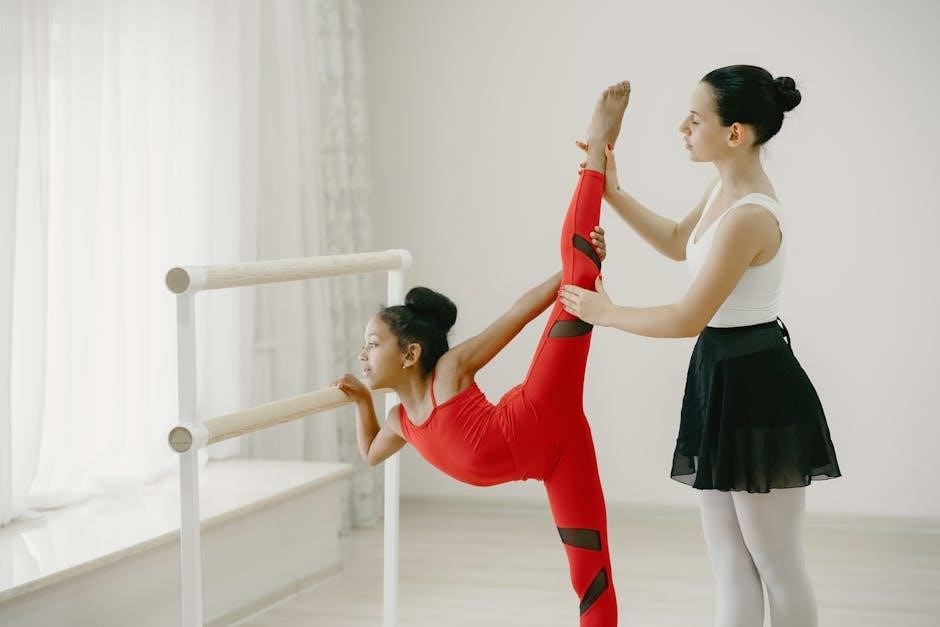
Grand Battements, translating to “large beats,” are a foundational barre exercise focusing on developing leg extension, flexibility, and strength. This exercise involves a sweeping, controlled movement of the leg, beating the leg open to the side or front, achieving a 90-degree angle or higher.
Executed while holding the barre for support, grand battements require a strong core and proper alignment. The movement originates from the hip, maintaining turnout throughout. A plié in the supporting leg provides the necessary momentum and control.
Focus is placed on maintaining a straight back and lifted chest, avoiding leaning or compensating. Grand battements improve range of motion, strengthen leg muscles, and enhance coordination. Consistent practice builds flexibility and prepares dancers for more advanced jumps and turns.
Advanced Barre Exercises & Variations
Advanced barre work builds upon fundamentals, incorporating challenging variations like petits battements, relevés, and échappés;
These exercises demand greater strength, control, and precision, refining technique and pushing physical limits.
Petits Battements: Small Beats
Petits battements, meaning “small beats” in French, are a cornerstone of advanced barre work, demanding precise control and articulation of the leg. This exercise involves a rapid, small beating action of the working leg against the supporting leg, just below the knee.
Executed at the barre, petits battements focus on strengthening the hip flexors, quadriceps, and core while improving ankle stability and coordination. The movement originates from the hip, not the knee, maintaining a lifted and engaged posture throughout.
Variations include petits battements sur le cou-de-pied (on the cou-de-pied position – foot wrapped) and petits battements tendus (extended). Maintaining proper alignment – a turned-out position, engaged core, and lifted spine – is crucial. Focus on keeping the movement small, quick, and controlled, avoiding any swaying or momentum.
Petits battements are excellent for developing muscular endurance and refining the dancer’s ability to isolate and control leg movements, contributing to overall technique and artistry.
Relevés: Rising onto the Balls of the Feet
Relevés, translating to “raised” in French, are a fundamental barre exercise focusing on strengthening the calf muscles and improving ankle stability. Performed facing the barre, relevés involve slowly rising onto the balls of the feet, maintaining a straight spine and engaged core.
This exercise builds strength in the plantar flexors, crucial for jumps and turns in ballet. Proper technique emphasizes a smooth, controlled ascent and descent, avoiding any sickling or rolling of the ankles. Variations include relevés in parallel, first, second, and fifth positions, increasing the challenge and targeting different muscle groups.
Holding the barre provides support, allowing dancers to focus on proper alignment and controlled movement. Maintaining a lifted posture and actively pressing through the balls of the feet are key. Relevés enhance balance, coordination, and the ability to articulate the feet, essential elements of ballet technique.
Consistent practice of relevés contributes to stronger ankles, improved posture, and a refined aesthetic in ballet performance.
Echappés: Escaping Movements
Echappés, meaning “escaping” in French, are a classic ballet barre exercise that develops turnout, coordination, and leg strength. Typically performed in first or second position, an échappé involves sliding the feet out to a defined width, maintaining turnout from the hips.
The movement emphasizes a smooth, controlled opening and closing of the legs, with a focus on maintaining proper alignment and a stable core. Dancers must avoid gripping with the thighs or losing turnout during the exercise. Variations include échappés sauté (jumped) and échappés relevé (rising onto the balls of the feet).
Holding the barre provides support, allowing dancers to concentrate on the correct technique and maintain balance. Echappés build strength in the outer thighs, glutes, and core, while simultaneously improving flexibility and range of motion in the hips.
Regular practice of échappés enhances turnout, coordination, and the overall fluidity of ballet movement.
Integrating Barre with Other Disciplines
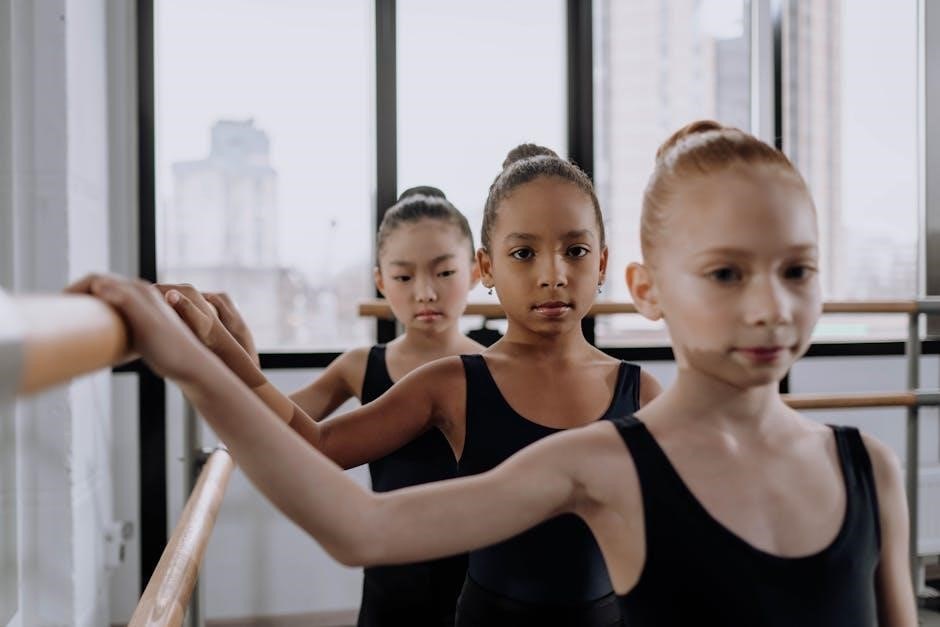
Barre seamlessly blends with Pilates and Yoga, enhancing flexibility, balance, and core strength. This synergy creates a holistic, effective workout routine.
Combining these disciplines maximizes results.
Barre and Pilates: A Synergistic Combination
Barre and Pilates share a remarkable synergy, creating a powerful and effective workout experience. Both disciplines emphasize core engagement, precise movements, and mindful breathing, making them natural complements.
Pilates provides a strong foundation for Barre, building deep core strength and stability, which are crucial for maintaining proper form and maximizing the benefits of Barre exercises. The focus on spinal alignment and controlled movements in Pilates translates directly to improved posture and technique at the Barre.
Conversely, Barre adds a dynamic, rhythmic element to Pilates, incorporating ballet-inspired movements that challenge muscular endurance and enhance flexibility. The high repetitions and isometric holds in Barre build lean muscle tone, while the emphasis on turnout and precise legwork improves range of motion and coordination. This combination results in a well-rounded workout that strengthens, lengthens, and tones the entire body.
Integrating Pilates principles into Barre classes, such as focusing on pelvic stability and initiating movement from the core, can elevate the workout to a new level of effectiveness.
Barre and Yoga: Enhancing Flexibility and Balance
Barre and Yoga represent a beautiful fusion, amplifying benefits for flexibility, balance, and mindful movement. Both disciplines prioritize body awareness and controlled breathing, fostering a deeper connection between mind and body.
Yoga’s emphasis on stretching and lengthening muscles perfectly complements Barre’s focus on isometric strength and precise movements. Holding Barre positions builds strength, while incorporating Yoga stretches increases range of motion and prevents injury. The practice of Yoga enhances the flexibility needed for advanced Barre techniques.
Furthermore, Yoga’s focus on balance poses directly translates to improved stability at the Barre. Strengthening core muscles through Yoga supports proper alignment and control during Barre exercises. The meditative aspects of Yoga also promote mental clarity and focus, enhancing the overall workout experience.
Combining these modalities creates a holistic approach to fitness, promoting both physical and mental well-being, and fostering a sense of grace and fluidity.
Barre Workout Resources (PDFs & Online)
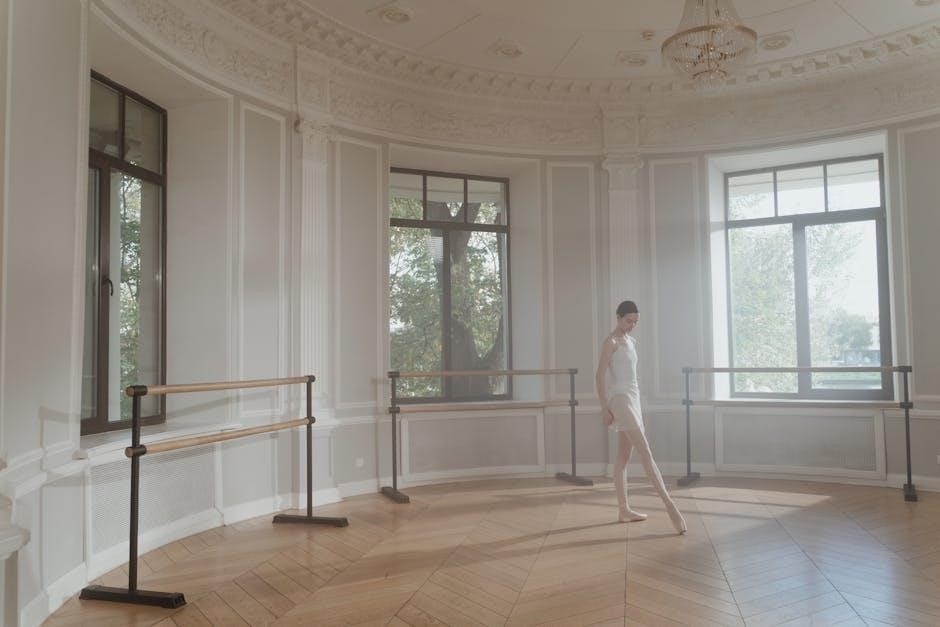
Numerous free PDFs and online platforms offer Ballet Barre exercises. These resources provide structured workouts, catering to all levels, from beginner to advanced practitioners.
Explore diverse options for convenient, accessible training.
Finding Free Ballet Barre Exercise PDFs
Locating free Ballet Barre exercise PDFs requires a bit of online searching, but numerous resources are available for enthusiasts at all levels. Many dance studios and fitness instructors generously share introductory materials as a way to attract new clients, resulting in downloadable PDFs outlining basic barre sequences.
Websites dedicated to fitness and dance often compile lists of free resources, including printable barre workouts. A focused Google search using keywords like “free ballet barre PDF,” “printable barre workout,” or “beginner barre exercises PDF” will yield a wealth of options. Be sure to preview the PDF to ensure it aligns with your fitness level and goals.
Pinterest is another excellent platform for discovering visually appealing barre exercise guides, many of which link to downloadable PDFs. Remember to prioritize PDFs from reputable sources to ensure the exercises are demonstrated correctly and safely. Always listen to your body and modify exercises as needed to prevent injury. Exploring these free resources is a fantastic way to begin or supplement your barre journey!
Popular Online Barre Class Platforms
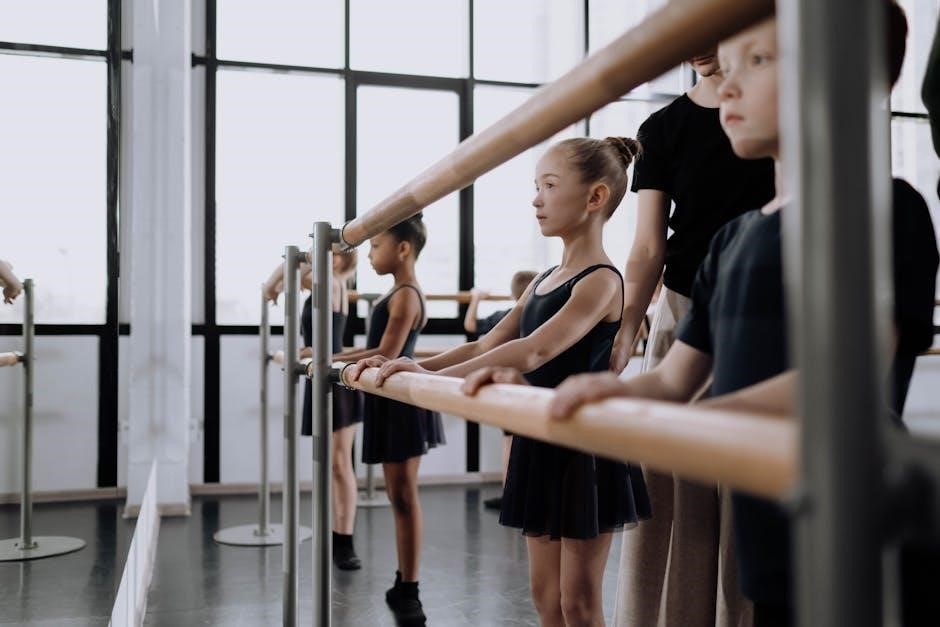
Numerous online platforms offer comprehensive ballet barre class experiences, often surpassing the scope of free PDF resources. These platforms typically provide structured programs, varying difficulty levels, and the guidance of certified instructors, ensuring proper form and progression.
Popular choices include Barre3, known for its emphasis on alignment and accessibility, and The Bar Method, which focuses on high-intensity, low-impact movements. Pure Barre is another widely recognized option, offering a classic barre experience with a strong community aspect. Many platforms offer free trial periods, allowing you to sample their classes before committing to a subscription.
Beyond these, platforms like Glo and Obé Fitness incorporate barre into broader fitness offerings, providing variety and cross-training opportunities. While these services require a paid subscription, they deliver a convenient and effective way to integrate ballet barre exercises into your routine, often with supplemental materials and personalized feedback.