Wood Frame Construction Manual: A Comprehensive Plan
This manual details wood framing techniques, from foundations to finishes, covering historical methods and modern trends․ It emphasizes rafter and truss systems,
plus concrete and wood foundations․
Wood frame construction represents a dominant building method, prized for its cost-effectiveness, versatility, and speed of assembly․ This approach utilizes relatively lightweight wood members – studs, joists, and rafters – to create the structural skeleton of a building․ Historically, wood’s abundance and ease of workability made it the natural choice for construction across many regions․
Today, while modern materials offer alternatives, wood framing continues to thrive, adapting to evolving building codes and incorporating innovative techniques․ The process often involves pre-fabricated components, like wood trusses, streamlining on-site construction․ Understanding the fundamentals of wood framing is crucial for builders, architects, and anyone involved in the construction industry․
This manual provides a comprehensive overview, detailing everything from foundation types – concrete and pressure-treated wood – to the intricacies of wall and roof framing․ We will explore both traditional and contemporary methods, ensuring a thorough grasp of this essential building practice․
Historical Overview of Wood Framing Techniques
Wood framing evolved significantly over time, adapting to available materials and changing architectural needs․ Early methods, like balloon framing, utilized long, continuous studs extending from the sill to the roof plate, offering simplicity but posing challenges with fire resistance and structural stability․ This technique, prevalent in the 19th century, gradually gave way to more practical approaches․
Platform framing emerged as a dominant technique, constructing walls in sections – platforms – offering improved fire safety and ease of construction․ Each floor acts as a platform for the next story’s walls․ A more recent development, combination framing, blends aspects of both balloon and platform methods, optimizing for specific project requirements․
Historically, framing was largely site-built, but today, mass-produced framing elements are common․ Understanding these historical transitions provides valuable context for modern wood frame construction, highlighting the continuous refinement of building practices․
Balloon Framing
Balloon framing, a prevalent method in the mid-19th century, utilized long, continuous vertical studs extending uninterrupted from the foundation sill to the roof plate․ This created tall wall cavities, requiring minimal horizontal bracing․ While efficient in material use, it presented significant drawbacks․
The continuous studs acted as a single flue, rapidly spreading fire throughout the structure – a major safety concern․ Furthermore, the long spans of studs were prone to warping and twisting, impacting structural integrity․ Inspecting and repairing these lengthy members proved difficult․
Despite its simplicity, balloon framing gradually fell out of favor due to these inherent weaknesses․ It demanded precise construction to avoid racking and relied heavily on diagonal bracing for stability․ Though largely superseded, understanding balloon framing offers insight into the evolution of wood frame construction․
Platform Framing
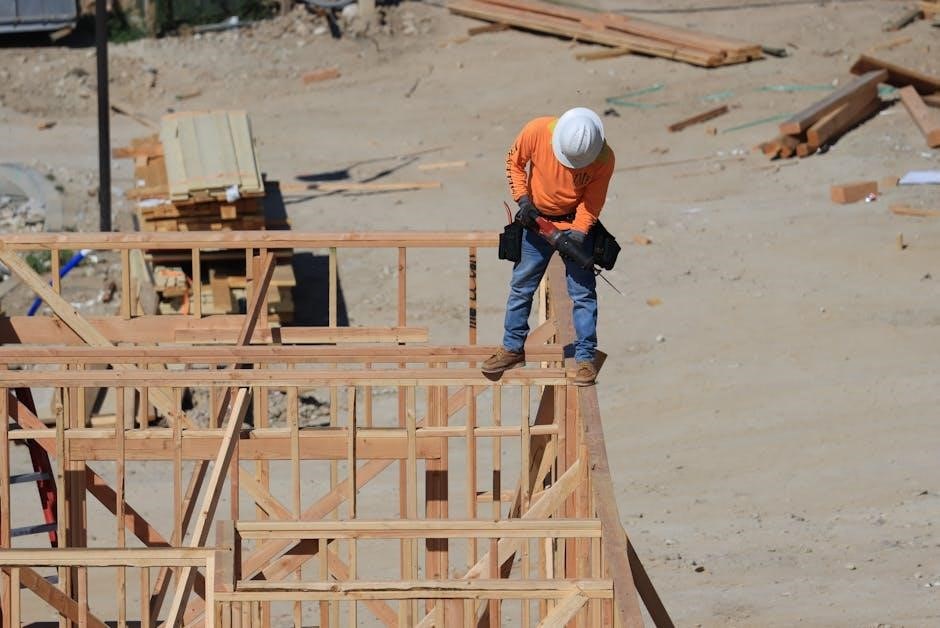
Platform framing, emerging as a safer and more practical alternative to balloon framing, became the dominant wood framing technique by the late 19th century and remains widely used today․ This method constructs walls in sections, creating a series of independent “platforms” at each floor level․
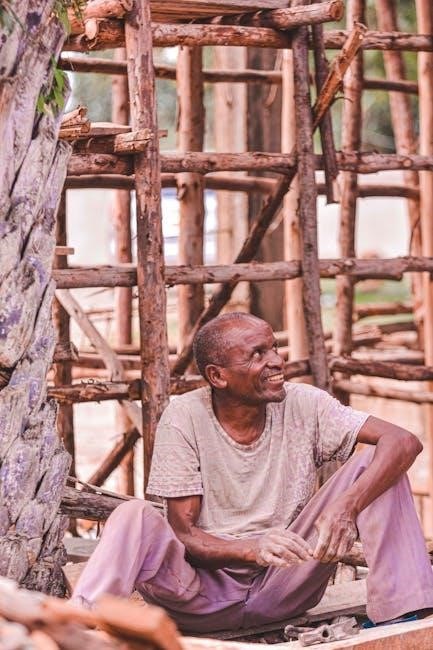
Each floor is built as a complete platform, with joists and subflooring installed before the next story’s walls are erected․ This compartmentalization significantly limits fire spread, enhancing safety․ Shorter stud lengths reduce warping and twisting, improving structural stability and ease of installation․

Platform framing allows for easier construction and inspection, as work progresses floor by floor․ It’s adaptable to various designs and simplifies the integration of openings for doors and windows․ This system’s inherent strength and practicality have solidified its position as the industry standard․
Combination Framing
Combination framing represents a hybrid approach, blending elements of both balloon and platform framing techniques to optimize construction efficiency and address specific project needs․ It typically employs platform framing for the first story, offering the benefits of compartmentalization and ease of construction at the ground level․
However, for subsequent stories, it reverts to balloon framing, utilizing continuous studs that extend from the sill plate to the roof plate․ This allows for larger, more open spaces and reduces the number of joints, potentially enhancing structural integrity in taller buildings․
Combination framing requires careful planning and execution to ensure proper load transfer between the platform and balloon-framed sections․ It’s often favored in situations where a balance between safety, cost-effectiveness, and design flexibility is desired, offering a versatile solution for diverse building projects․
Foundations for Wood Frame Structures
Foundations are critical for wood frame structures, providing stability and protecting against moisture and ground movement․ Two principal types are commonly employed: concrete and pressure-treated wood․ Concrete foundations, utilizing footings with poured concrete or masonry block walls, remain the most prevalent choice due to their durability and cost-effectiveness․
However, pressure-treated wood foundations are gaining popularity, particularly in specific soil conditions or where faster construction is desired․ These foundations consist of treated lumber framing, creating a robust and well-insulated base․
Proper foundation design considers local soil conditions, frost lines, and building codes․ Adequate drainage is essential to prevent water damage․ Careful attention to detail during foundation construction ensures the long-term integrity and performance of the entire wood frame structure․
Concrete Foundations
Concrete foundations represent a traditional and highly reliable choice for wood frame construction․ They typically begin with concrete footings, poured below the frost line to prevent shifting due to freezing and thawing cycles․ These footings support foundation walls constructed from poured concrete or concrete masonry blocks (CMU)․
Proper reinforcement with steel rebar is crucial within both footings and walls to enhance strength and resist cracking․ Waterproofing the exterior of the foundation walls is essential to prevent moisture intrusion․ Backfilling around the foundation should be carefully compacted to provide stability․
Concrete foundations offer excellent durability, fire resistance, and resistance to pests․ They are well-suited for a wide range of soil conditions and building designs, making them a versatile and long-lasting option for supporting wood frame structures․
Pressure-Treated Wood Foundations
Pressure-treated wood foundations (PTWF) offer an alternative to concrete, utilizing lumber treated with preservatives to resist decay and insect damage․ These foundations consist of treated wood posts and beams forming a grid, supporting a treated wood subfloor․ Gravel or crushed stone is typically used for drainage and ventilation beneath the subfloor․
Properly treated lumber, conforming to industry standards, is vital for longevity․ PTWFs are particularly well-suited for sites with challenging soil conditions or where concrete is difficult to deliver․ Careful attention to detailing is crucial to prevent moisture accumulation and maintain structural integrity․
While offering potential cost savings and ease of construction, PTWFs require diligent inspection and maintenance․ They are gaining popularity as a sustainable building option, offering a lighter environmental footprint compared to traditional concrete foundations․
Framing Materials: Lumber and Sheathing
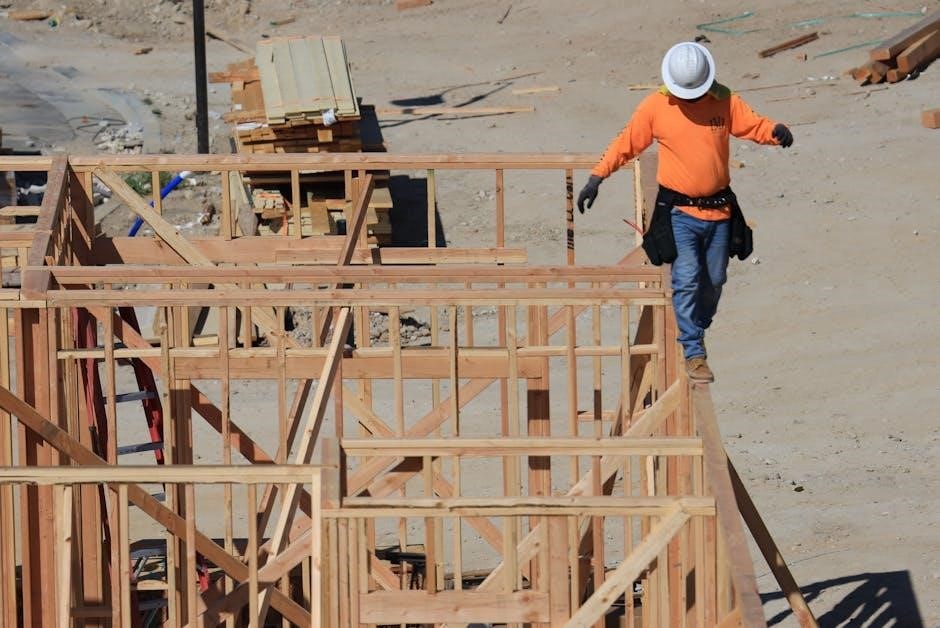
Lumber selection is paramount in wood frame construction, with species like Spruce-Pine-Fir (SPF) and Douglas Fir commonly used for framing․ Lumber grades, denoted by numbers and letters, indicate quality and strength․ Kiln-dried lumber minimizes shrinkage and warping, ensuring dimensional stability․
Sheathing materials, applied over the framing, provide structural support and a nailing surface for exterior finishes․ Plywood and Oriented Strand Board (OSB) are prevalent choices, offering varying degrees of strength and water resistance․ The thickness of sheathing is dictated by building codes and design loads․
Modern advancements include engineered wood products like laminated veneer lumber (LVL) and I-joists, offering increased strength and spanning capabilities․ Proper storage and handling of lumber and sheathing are essential to prevent damage and maintain material integrity throughout the construction process․
Wall Framing: Detailed Construction
Exterior wall framing begins with a sill plate anchored to the foundation, followed by the installation of studs, typically spaced 16 or 24 inches on center․ Headers support openings for windows and doors, distributing loads effectively․ Top plates distribute roof loads and provide a nailing surface for sheathing․
Interior wall framing utilizes similar techniques, though often with lighter lumber sizes․ Wall layouts must accommodate electrical wiring, plumbing, and HVAC systems․ Proper bracing, using diagonal let-in or surface-mounted bracing, ensures wall stability and resistance to racking forces․
Accurate plumb and square are crucial during wall construction․ Utilizing a level and square ensures walls are straight and true․ Gypsum board (drywall) is the standard interior sheathing, providing a fire-resistant and finish-ready surface;

Exterior Wall Framing
Exterior wall framing demands robust construction to withstand environmental loads․ It starts with a properly anchored sill plate, treated to resist moisture and insect damage․ Studs, typically 2×6 or 2×4 lumber, are installed at regular intervals – 16” or 24” on center – depending on design requirements and local codes․
Headers, sized according to span and load, are crucial above openings for windows and doors, ensuring structural integrity․ Sheathing, often plywood or OSB, is applied to the exterior, providing racking resistance and a nailing base for siding․

Proper flashing around windows and doors is vital to prevent water intrusion․ Exterior walls require careful consideration of insulation, vapor barriers, and weather-resistant barriers to maintain energy efficiency and protect the structure․ Horizontal wood siding, fiber cement panels, or brick veneer are common exterior finishes․
Interior Wall Framing
Interior wall framing, while less exposed to the elements, is crucial for defining spaces and supporting interior finishes․ Typically constructed with 2×4 lumber, studs are installed at 16” or 24” on center, depending on load and code requirements․ Unlike exterior walls, interior framing doesn’t always necessitate the same level of moisture protection, though soundproofing considerations may apply․
Top and bottom plates distribute loads and provide nailing surfaces․ Openings for doors require appropriately sized headers to prevent sagging; Interior walls often incorporate blocking between studs for added support, particularly for heavy fixtures like cabinets or shelving․
Gypsum board (drywall) is the standard sheathing material, offering fire resistance, stability, and a smooth surface for finishing․ Careful attention to detail during framing ensures walls are plumb and square, facilitating easy drywall installation and a professional final appearance․
Roof Framing Systems
Roof framing is a critical component, responsible for shedding water and supporting roof loads․ Two primary systems dominate wood frame construction: rafter framing and wood truss systems․ Rafters, sloping joists, rely on a network of interconnected members – ridges, hips, valleys – to transfer loads to exterior walls․
Wood trusses, pre-fabricated assemblies, offer longer spans and faster installation․ They distribute loads more efficiently, reducing the need for interior load-bearing walls․ Truss design considers snow loads, wind uplift, and dead loads․
Properly installed roof sheathing, typically plywood or OSB, provides a nailing surface for roofing materials and contributes to structural integrity․ Ventilation is crucial to prevent moisture buildup and prolong roof life․ Accurate cuts and secure connections are paramount for a durable, weather-resistant roof․
Rafter Framing
Rafter framing utilizes individual sloping joists – the rafters – to create the roof’s shape and support its load․ Key components include the ridge board, the horizontal member at the roof’s peak, and collar ties, which prevent rafter spread․ Hip rafters form the angled corners of hip roofs, while valley rafters support the intersections of gable roofs․
Accurate cutting and precise angles are essential for a tight, structurally sound roof․ Rafters are typically spaced 16 or 24 inches on center, depending on local codes and load requirements․ Proper support from the top plate of the wall is crucial․
Rafter framing demands careful consideration of snow loads, wind uplift, and the weight of roofing materials․ It’s a traditional method offering flexibility in design, but requires skilled craftsmanship for optimal performance․
Wood Truss Systems
Wood truss systems represent a pre-engineered, highly efficient roofing solution․ Constructed off-site, trusses comprise interconnected triangular units, distributing loads effectively․ Common types include gable trusses, hip trusses, and scissor trusses, each designed for specific roof geometries․
Trusses are typically fabricated from light wood framing, utilizing lumber and metal connector plates․ This prefabrication minimizes on-site labor and waste, accelerating construction timelines; Precise engineering ensures structural integrity, accommodating significant spans and complex roof designs․
Proper installation is paramount; trusses must be installed according to the manufacturer’s specifications, maintaining their intended shape and bracing․ Wood truss systems offer cost-effectiveness and design versatility, becoming increasingly popular in modern residential construction․
Wall Sheathing and Exterior Finishes
Wall sheathing provides crucial structural support and a nailing surface for exterior finishes․ Common materials include plywood and oriented strand board (OSB), applied horizontally or vertically to wood framing․ Proper fastening is essential, utilizing appropriate nails or screws to ensure a secure connection․
Exterior finishes protect the structure from the elements and contribute to aesthetic appeal․ Options are diverse, ranging from horizontal wood siding to vertical fiber cement panels and even brick veneer․ Each material offers varying levels of durability, maintenance requirements, and cost․
Moisture management is critical; a weather-resistant barrier (WRB) should be installed beneath the exterior finish to prevent water intrusion․ Proper detailing around windows and doors is also vital to ensure a watertight envelope․ Careful selection and installation of sheathing and finishes contribute to a long-lasting, visually appealing structure․
Interior Finishes: Drywall Installation
Drywall, also known as gypsum board, is the standard interior wall sheathing, offering fire-resistance, stability, and a smooth surface for finishing․ Installation begins with accurately fastening drywall sheets to the wood framing using drywall screws․
Proper joint treatment is crucial for a seamless appearance․ This involves applying joint compound (mud) to cover seams and screw holes, followed by taping and sanding․ Multiple coats are typically required to achieve a level, paintable surface․
Corner bead protects vulnerable corners and provides a straight edge for finishing․ Texturing can be applied to create various aesthetic effects․ Drywall installation requires precision and attention to detail, ensuring a durable and visually appealing interior finish․ Careful preparation is key to a professional result․
Modern Trends in Wood Frame Construction
Modern wood frame construction increasingly utilizes mass-produced framing elements assembled on-site, enhancing efficiency and reducing waste; Finnish frame technology, employing dry calibrated timber and natural insulation, gains popularity for its sustainability and performance․
Advanced framing techniques, like optimized stud spacing and single top plates, minimize lumber usage while maintaining structural integrity․ Prefabricated wall panels and roof trusses further accelerate construction timelines and improve quality control․
There’s a growing focus on energy efficiency, incorporating improved insulation and air sealing details․ Utilizing timber frame structures, which are point load construction, offers design flexibility․ These trends reflect a commitment to sustainable building practices and innovative construction methods within the wood framing industry․
Building Codes and Regulations
Wood frame construction is heavily governed by local, regional, and national building codes designed to ensure safety, structural integrity, and fire resistance․ These regulations dictate acceptable materials, construction methods, and inspection procedures․
Compliance with codes is crucial, covering aspects like lumber grading, fastener schedules, and wall bracing requirements․ Fire-resistance is a key concern, often addressed through the use of gypsum board (drywall) as interior wall sheathing․
Regular updates to codes reflect evolving best practices and new technologies․ Builders must stay informed about these changes and adhere to the latest standards․ Proper permitting and inspections are essential throughout the construction process to verify code compliance and ensure a safe, durable structure․ Ignoring these regulations can lead to costly delays and legal issues․