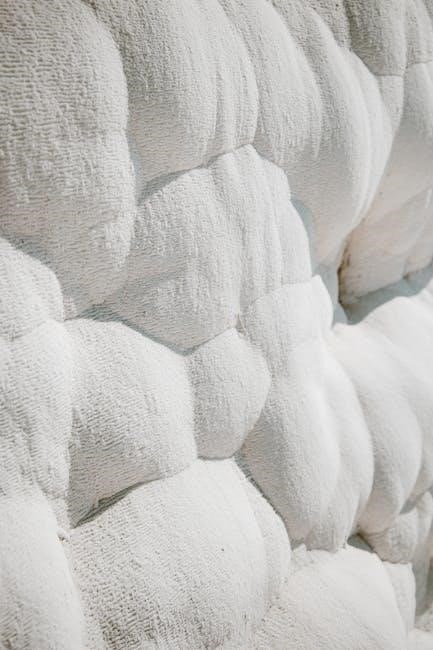
Rocks are composed of minerals, naturally occurring inorganic solids, forming the Earth’s crust; understanding their origins is key to geological study and appreciation.
What are Minerals?
Minerals are naturally occurring, inorganic substances with a defined chemical composition and crystalline structure. They represent the fundamental building blocks of rocks, essentially the ‘ingredients’ that compose them. With over 4,000 named minerals, identifying them can be complex, yet crucial for understanding geological processes.
A dedicated collector might readily identify a couple of hundred minerals through sight identification, but the vast majority require more detailed analysis. Mineral identification relies on observing key properties like color, streak, hardness, luster, crystal form, and cleavage. These characteristics, when systematically examined, allow for accurate determination.
Resources like field guides and kits, such as the GeoLearns Rock and Mineral Kit, aid in this process, providing hands-on experience and systematic approaches to mineral identification, even in field settings.
What are Rocks?
Rocks are naturally formed aggregates of one or more minerals, representing a significant portion of the Earth’s crust. They are classified into three main types – igneous, sedimentary, and metamorphic – based on their origin and formation processes. Identifying rocks involves determining both their composition, based on mineral content or color, and their texture.
Understanding rock formation requires considering the geological history of an area. For instance, sedimentary rocks often form from accumulated sediments, while metamorphic rocks result from the transformation of existing rocks under heat and pressure. Field guides, like the Rock Identification Field Guide, are invaluable tools for this process.
Examining rock samples collected from locations like the Cliffs of Fundy Geopark provides practical experience in rock identification and geological interpretation.
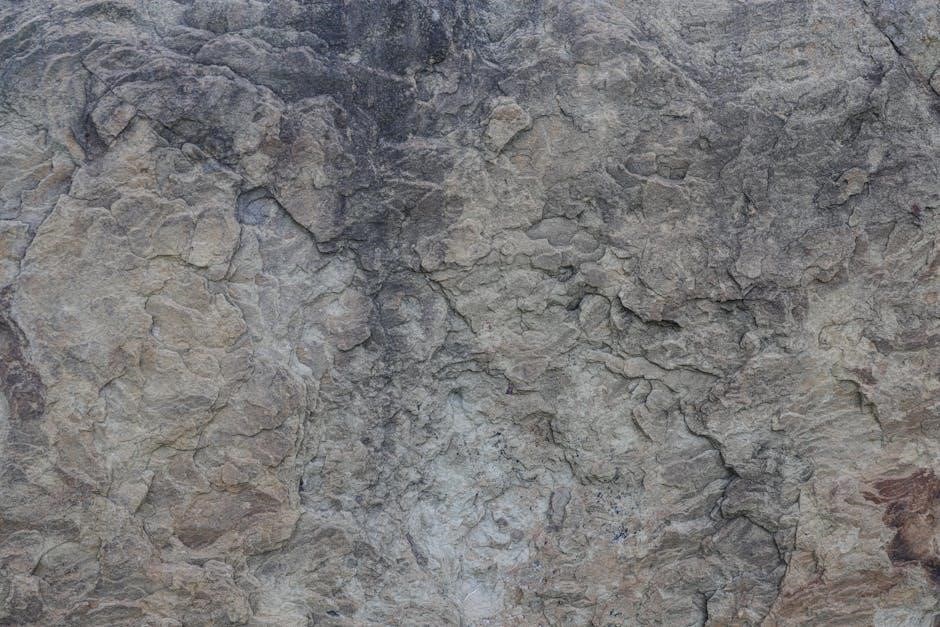
Mineral Identification
Mineral identification relies on observing key properties like color, streak, hardness, luster, crystal form, and cleavage to determine a mineral’s unique characteristics;
Key Properties for Mineral Identification
Identifying minerals accurately requires careful observation of several key properties. Color is often the first noticeable trait, but can be misleading due to impurities. The streak, the color of a mineral’s powder, is more consistent. Hardness, measured on the Mohs scale, indicates resistance to scratching.
Luster describes how light reflects off a mineral’s surface – metallic, glassy, or dull. Crystal form refers to the characteristic shape of mineral crystals, while cleavage describes how a mineral breaks along specific planes. These properties, when combined, provide a reliable basis for mineral identification, even with the vast number of known minerals—over 4000 currently named!
Color and Streak
Color, though immediately apparent, can be an unreliable property for mineral identification. Many minerals exhibit a range of colors due to trace impurities or variations in composition. For example, quartz can appear in various shades, from clear to purple (amethyst) to smoky gray. Therefore, relying solely on color can lead to misidentification.
The streak, however, offers a more consistent diagnostic tool. It’s determined by rubbing the mineral across a streak plate (unglazed porcelain) and observing the color of the powder left behind. This powdered form minimizes the influence of surface coloration, providing a more reliable indicator of a mineral’s true composition and identity.
Hardness and Luster
Hardness, referring to a mineral’s resistance to scratching, is assessed using the Mohs Hardness Scale, ranging from 1 (talc) to 10 (diamond). A mineral can scratch any substance with a lower Mohs number. This comparative test helps narrow down potential identifications, as hardness is a relatively consistent property.
Luster describes how light interacts with a mineral’s surface. It’s categorized into metallic (shiny, like metal) and non-metallic, with further subdivisions within the latter. Non-metallic lusters include vitreous (glassy), pearly, silky, resinous, and dull. Observing luster, alongside hardness, provides crucial clues for mineral identification, aiding in distinguishing between similar-looking specimens.
Crystal Form and Cleavage
Crystal form describes the outward expression of a mineral’s internal atomic structure, revealing its natural geometric shape when allowed to grow freely. Common forms include cubic, prismatic, and tabular, though perfect crystals are rare in nature due to growth constraints. Observing crystal habit offers valuable identification insights.
Cleavage refers to the tendency of a mineral to break along specific planes of weakness within its crystal structure. It’s described by the quality and number of cleavage directions. Minerals like mica exhibit perfect basal cleavage, splitting into thin sheets, while others show poor or no cleavage, fracturing instead. Analyzing cleavage patterns is a key step in mineral identification.
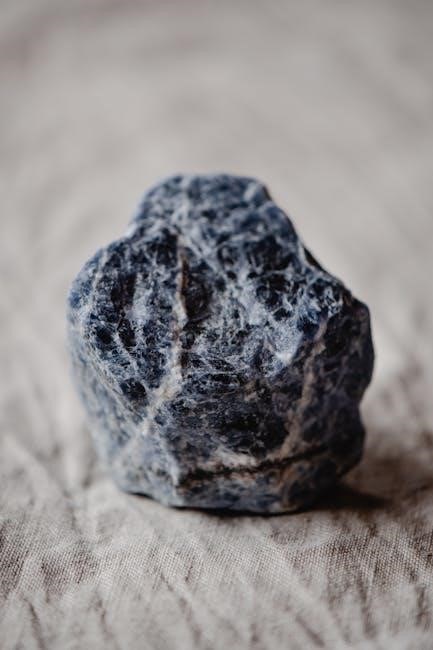
Rock Classification
Rocks are categorized into three main types – igneous, sedimentary, and metamorphic – based on their formation processes and mineral composition.
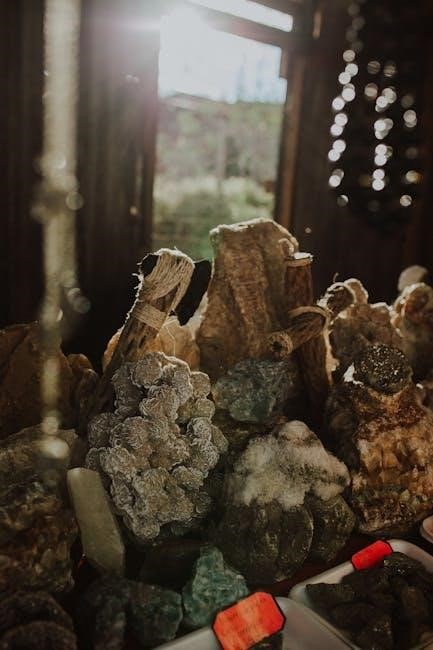
Igneous Rocks
Igneous rocks originate from the cooling and solidification of magma (molten rock beneath the surface) or lava (molten rock above the surface). Their composition and texture reveal crucial details about their formation environment. Determining composition, based on mineral content or color, is fundamental to identification.
These rocks are broadly classified as intrusive or extrusive. Intrusive igneous rocks, like granite, cool slowly beneath the Earth’s surface, allowing large crystals to form, resulting in a coarse-grained texture. Conversely, extrusive igneous rocks, such as basalt, cool rapidly on the surface, leading to small or no visible crystals and a fine-grained or glassy texture.
Understanding these differences is vital for accurate rock classification and interpreting Earth’s geological history. The study of igneous rocks provides insights into volcanic activity and the processes occurring within our planet.
Intrusive vs. Extrusive Igneous Rocks
Intrusive igneous rocks solidify from magma slowly cooling beneath the Earth’s surface. This slow cooling allows ample time for large, visible crystals to develop, creating a coarse-grained texture – think granite. They often form massive bodies within the crust, exposed later through uplift and erosion.
Extrusive igneous rocks, conversely, form from lava cooling above the surface. Rapid cooling inhibits crystal growth, resulting in fine-grained textures, like basalt, or even glassy textures if cooling is instantaneous. Volcanic eruptions are the primary source of extrusive rocks;
Texture is the key differentiator: coarse-grained indicates intrusive origin, while fine-grained or glassy suggests an extrusive environment. Analyzing these textures helps geologists reconstruct volcanic and magmatic processes.
Sedimentary Rocks
Sedimentary rocks are formed from accumulated sediments – fragments of other rocks, minerals, or organic matter. These sediments undergo processes like weathering, erosion, transportation, deposition, and lithification (compaction and cementation) to become solid rock.
They provide valuable insights into past environments and often contain fossils, offering clues about ancient life. Understanding sedimentary rocks is crucial for resource exploration, as they frequently host oil, gas, and coal deposits.
Simulating sedimentary rock formation, as suggested for classroom activities, helps visualize these processes. Studying these rocks reveals Earth’s history, recorded in layers of accumulated material over vast timescales.
Clastic, Chemical, and Organic Sedimentary Rocks
Clastic sedimentary rocks, like sandstone and shale, form from fragments of pre-existing rocks and minerals. Their classification depends on grain size – from coarse gravel to fine clay. Chemical sedimentary rocks, such as limestone and rock salt, precipitate directly from solutions, often through evaporation or chemical reactions.
Organic sedimentary rocks, including coal and some limestones, originate from the accumulation and lithification of organic matter, like plant remains or shells. Identifying these rock types involves examining their composition, texture, and the presence of fossils or specific chemical features.
These distinctions are vital for understanding the depositional environment and history of the rock, providing clues about past climates and geological processes.
Metamorphic Rocks
Metamorphic rocks arise from the transformation of existing igneous or sedimentary rocks through heat, pressure, or chemically active fluids. This process alters the mineralogy, texture, and sometimes the chemical composition of the parent rock, creating entirely new formations.
Understanding metamorphic rocks requires recognizing the effects of these transformative forces. Two primary types exist: foliated, displaying a layered or banded appearance due to mineral alignment, and non-foliated, lacking this distinct layering.
Identifying metamorphic rocks involves analyzing their texture, mineral composition, and the evidence of past deformation, revealing insights into the Earth’s dynamic processes.
Foliated vs. Non-Foliated Metamorphic Rocks
Foliated metamorphic rocks, like slate, schist, and gneiss, exhibit a parallel alignment of minerals due to directed pressure during formation. This creates a layered or banded texture, easily visible to the naked eye, showcasing the rock’s history of deformation.
Conversely, non-foliated metamorphic rocks, such as marble and quartzite, lack this layered appearance. They typically form under conditions of uniform pressure or from rocks composed of minerals that don’t readily align.
Distinguishing between these types is crucial for understanding the metamorphic environment and the forces that shaped the rock, providing valuable clues about Earth’s geological past.
Common Minerals
Quartz, feldspar, and mica are fundamental rock-forming minerals, frequently encountered in various geological settings and essential for rock identification.
Quartz
Quartz is a highly prevalent mineral, renowned for its chemical composition of silicon dioxide (SiO₂). It exhibits a remarkable hardness, scoring a 7 on the Mohs scale, making it resistant to scratching. Its crystalline structure often presents in hexagonal prisms, though it can also appear massive. Quartz displays a vitreous luster and comes in a diverse array of colors, including clear, milky, rose, smoky, and amethyst, due to trace element inclusions.
Identifying quartz involves observing its hardness, luster, and lack of cleavage. It’s a key component in many igneous, metamorphic, and sedimentary rocks. Determining quartz and carbonate minerals requires specific tests, as detailed in mineral identification guides. Its widespread presence makes it a cornerstone for geological study and a frequent find for rock collectors.
Feldspar
Feldspar constitutes a significant portion of the Earth’s crust, forming approximately 60% of all terrestrial rocks. This group of rock-forming minerals includes potassium feldspar (orthoclase, microcline) and plagioclase feldspar (albite, anorthite). Feldspar typically exhibits a vitreous to pearly luster and displays good cleavage in two directions, creating a blocky or tabular appearance.
Its hardness ranges from 6 to 6.5 on the Mohs scale. Feldspar’s color varies widely, including pink, white, gray, and green. Identifying feldspar involves observing its cleavage, luster, and hardness. It’s a crucial mineral in igneous and metamorphic rocks, aiding in their classification based on mineral content and composition, as detailed in rock identification field guides.
Mica
Mica minerals are characterized by their perfect basal cleavage, allowing them to be easily split into thin, flexible sheets. Common types include muscovite (white mica) and biotite (black mica). These silicate minerals are found in igneous, metamorphic, and sedimentary rocks, often exhibiting a distinctive flaky texture.
Mica displays a pearly or vitreous luster and typically possesses a light color, though biotite can be dark brown or black. Its hardness is relatively low, around 2.5 to 3 on the Mohs scale. Identifying mica relies heavily on its perfect cleavage and sheet-like structure. Field guides emphasize mica’s presence as an indicator of certain rock types and metamorphic conditions, aiding in accurate rock classification.
Rock and Mineral Kits & Guides
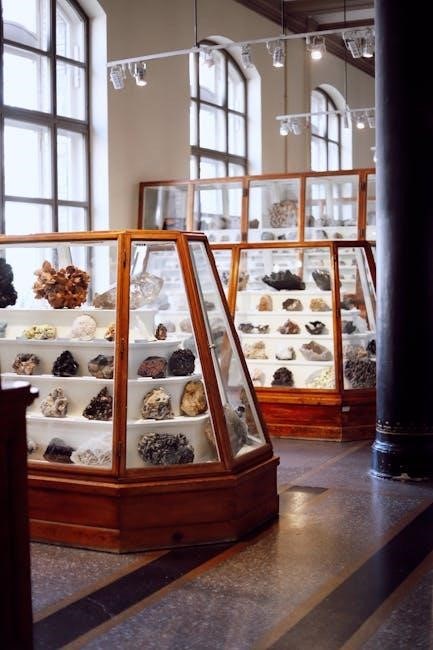
Field guides and kits, like GeoLearns, facilitate mineral and rock identification, offering hands-on learning and detailed resources for collectors and students.
Using Field Guides for Identification
Field guides are essential tools for both novice and experienced enthusiasts seeking to identify rocks and minerals accurately. These guides typically present characteristics in a systematic manner, aiding in visual sight identification. They often include detailed photographs and descriptions of key properties like color, luster, hardness, and crystal form.
Guides like the “Rock Identification Field Guide” provide comprehensive coverage, while resources focusing on specific regions, such as the Cliffs of Fundy Geopark, offer localized information. Successfully utilizing a field guide involves careful observation and comparison of specimens to the provided illustrations and descriptions. Remember that with over 4000 named minerals, relying solely on visual identification can be challenging, making systematic techniques crucial.
Furthermore, understanding the geological context where a sample was found can significantly aid in its identification process, enhancing the effectiveness of the field guide.
GeoLearns Rock and Mineral Kit
The GeoLearns Rock and Mineral Kit provides a hands-on learning experience, allowing individuals to explore geological specimens directly. These kits often include a curated selection of common rocks and minerals, facilitating practical identification exercises. They complement field guides by offering tangible examples for comparison, enhancing understanding of key properties.
The kit’s value lies in its ability to bridge the gap between theoretical knowledge and real-world observation. Specimens within kits, like those donated by the Nova Scotia Department of Natural Resources and Renewables, often originate from specific geological locations, adding contextual value.
Combined with resources like Volume I, “Mineral ID Tests and Determinations”, the kit fosters a systematic approach to mineral identification, promoting accurate results through step-by-step guidance.
Advanced Mineral Identification Techniques
Volume I details step-by-step, hands-on field and laboratory approaches to mineral identification, focusing on systematic methods for accurate determinations and results.
Mineral ID Tests and Determinations
Systematic, explicit steps guide users toward accurate mineral identification, employing a practical field and laboratory approach detailed in Volume I. This resource focuses on techniques for determining mineral identity, acknowledging the vast number – over 4000 named minerals – that can challenge even dedicated collectors.
The guide emphasizes learning techniques, moving beyond simple sight identification. It provides a structured methodology, enabling users to confidently navigate the complexities of mineralogy. This approach is crucial, as identifying minerals often requires more than just visual observation, necessitating a deeper understanding of their properties and characteristics. The document aims to empower individuals with the skills needed for precise mineral analysis.
Identifying Quartz and Carbonate Minerals
Specific tests facilitate the identification of common minerals like quartz and carbonates, crucial components of many rock formations. These determinations often involve observing reactions to dilute hydrochloric acid – carbonates effervesce, a key diagnostic feature. Quartz, known for its hardness, resists scratching with a knife, unlike many carbonates.
Detailed guides outline procedures for distinguishing between these mineral groups, emphasizing macroscopic observation and simple chemical tests. Understanding these distinctions is vital for accurate rock classification and geological interpretation. The process allows for practical application of mineral identification skills, bridging theoretical knowledge with real-world samples, and enhancing analytical capabilities.