Fire extinguishers are crucial safety devices, combating various fire types with specialized agents; understanding their classifications and proper usage is paramount for effective response;
Importance of Fire Safety
Prioritizing fire safety is absolutely essential for protecting lives, property, and the environment․ Fires can erupt unexpectedly, escalating rapidly and causing devastating consequences․ Having readily available and correctly maintained fire extinguishers, alongside a comprehensive fire safety plan, significantly minimizes potential damage․
Understanding the different types of fire extinguishers – water, foam, dry chemical, and carbon dioxide – and their specific applications is vital․ Knowing which extinguisher to use on a particular class of fire prevents exacerbating the situation and ensures a safe, effective response․ Regular training and inspections are also key components of a robust fire safety strategy․
Understanding Fire Classes
Fires are categorized into classes – A, B, C, D, and K – based on the fuel source․ Class A involves ordinary combustibles like wood and paper, while Class B concerns flammable liquids such as gasoline and oil․ Class C fires involve electrical equipment, and Class D pertains to combustible metals․ Finally, Class K fires involve cooking oils and fats․
Selecting the appropriate fire extinguisher depends entirely on the fire class․ Using the wrong extinguisher can be ineffective or even dangerous, potentially spreading the fire․ Understanding these classifications is crucial for a swift and safe response, ensuring the correct extinguishing agent is deployed for optimal results and minimizing risk․
Water Fire Extinguishers
Water extinguishers effectively cool burning materials, lowering temperatures below ignition point, and are primarily used for Class A fires involving ordinary combustibles․
How Water Extinguishers Work
Water fire extinguishers operate on a simple, yet effective, cooling principle․ Pressurized water is discharged, absorbing heat from the burning fuel․ This reduction in temperature aims to bring the material below its ignition point, thus extinguishing the flames․ The water doesn’t smother the fire; it directly addresses the heat component of the fire triangle – fuel, heat, and oxygen․
Typically, these extinguishers contain water and a propellant, often compressed air․ When activated, the propellant expels the water through a nozzle, creating a stream or spray․ The spray pattern increases the surface area, enhancing the cooling effect․ It’s important to note that water’s effectiveness relies on its ability to penetrate and soak the burning material, making it ideal for porous substances․
Class A Fires and Water Extinguishers
Class A fires involve ordinary combustible materials like wood, paper, cloth, rubber, and some plastics; Water extinguishers are exceptionally effective against these types of fires due to their cooling and wetting capabilities․ The water penetrates these materials, reducing their temperature below the combustion point and preventing re-ignition․
However, it’s crucial to ensure complete saturation․ A superficial application might temporarily suppress the flames, but the fire could easily flare up again․ Water’s ability to soak into these porous materials makes it a superior choice compared to agents that simply displace oxygen or create a barrier․ This makes water extinguishers a primary defense for common household and workplace fires involving everyday combustibles․
Limitations of Water Extinguishers
Water extinguishers are remarkably effective, but possess significant limitations․ They are strictly prohibited on Class B fires – involving flammable liquids like gasoline or oil – as water can spread the fire, exacerbating the situation․ Similarly, using water on Class C fires, those involving energized electrical equipment, presents a severe electrocution hazard․
Furthermore, water is ineffective on Class D fires, which involve combustible metals like magnesium or titanium, potentially causing violent reactions․ Water’s freezing point is also a concern in cold environments, rendering the extinguisher useless․ Always verify the fire class before deployment; incorrect usage can be dangerous and counterproductive․
Foam Fire Extinguishers
Foam extinguishers, particularly AFFF types, effectively suppress fires by creating a film that smothers the fuel and prevents reignition, offering versatile protection․
AFFF (Aqueous Film Forming Foam) Extinguishers
Aqueous Film Forming Foam (AFFF) extinguishers are highly effective, utilizing a specialized foam concentrate mixed with water․ This creates a film that spreads rapidly across flammable liquid surfaces, simultaneously cooling and oxygen-depriving the fuel source․ AFFF is particularly adept at tackling Class B fires – those involving flammable liquids like gasoline, oil, and solvents․
The foam’s ability to form a vapor-suppressing blanket prevents the release of flammable vapors, significantly reducing the risk of re-ignition․ These extinguishers are commonly found in areas where flammable liquid spills are likely, such as fuel storage facilities, garages, and industrial settings․ Modern formulations are evolving to address environmental concerns, with newer options focusing on fluorine-free foams․
Class A & B Fires and Foam Extinguishers
Foam extinguishers demonstrate versatility, effectively combating both Class A and Class B fires․ Class A fires involve ordinary combustibles like wood, paper, and cloth; the foam penetrates these materials, cooling them below their ignition temperature and preventing re-flash․ Simultaneously, they excel on Class B fires – flammable liquids – by creating a suppressing film․
This film floats atop the liquid, cutting off oxygen supply and preventing vapor release, crucial for extinguishing and preventing re-ignition․ Unlike water, foam doesn’t mix with flammable liquids, enhancing its effectiveness․ This dual-action capability makes foam extinguishers a valuable asset in diverse environments, offering broad fire protection․
Foam Extinguisher Applications
Foam extinguishers find widespread application in areas prone to both Class A and B fire hazards․ They are particularly useful in industrial settings, garages, and warehouses where flammable liquids are stored or used alongside combustible materials․ Their effectiveness extends to marine environments, protecting vessels from fuel-based fires․
Furthermore, foam extinguishers are frequently deployed in areas with electrical equipment, offering a safer alternative to water-based solutions․ They are ideal for quickly suppressing spills of flammable liquids, minimizing fire spread and potential damage․ Regular inspection and maintenance are vital to ensure optimal performance and reliability in emergency situations․
Dry Chemical Fire Extinguishers
Dry chemical extinguishers utilize powders like sodium bicarbonate, potassium bicarbonate, or monoammonium phosphate to interrupt chemical reactions and quickly suppress flames․
Types of Dry Chemical Agents (Sodium Bicarbonate, Potassium Bicarbonate, Monoammonium Phosphate)
Dry chemical extinguishers employ several agents, each with unique properties․ Sodium bicarbonate is effective on Class B and C fires, interrupting the chemical chain․ Potassium bicarbonate, a more versatile agent, tackles Class A, B, and C fires with increased efficiency․ Monoammonium phosphate is a multi-purpose option, excelling on Class A, B, and C fires due to its ability to cool burning materials and create a barrier against re-ignition․
The choice depends on the potential fire hazards; each agent offers specific advantages in different scenarios, ensuring optimal fire suppression capabilities․ Understanding these distinctions is vital for selecting the appropriate extinguisher for a given environment․
Class A, B, & C Fires and Dry Chemical Extinguishers
Dry chemical extinguishers are remarkably versatile, effectively combating Class A fires involving ordinary combustibles like wood and paper․ They disrupt the chemical reaction, smothering the flames․ For Class B fires – flammable liquids such as gasoline and oil – they interrupt the fuel source․ Crucially, they also address Class C fires, those involving energized electrical equipment, by being non-conductive․
This broad-spectrum capability makes them a common choice for general-purpose fire protection․ However, the discharged chemical can create a residue requiring cleanup, and visibility may be reduced during use, necessitating caution․
Dry Chemical Extinguisher Effectiveness
Dry chemical extinguishers demonstrate high effectiveness due to their rapid knock-down capabilities, quickly suppressing flames and allowing for escape or further intervention․ Their ability to coat the fuel source prevents re-ignition, enhancing safety․ However, effectiveness diminishes in windy conditions as the agent can be dispersed․
Proper application is vital; aiming at the base of the fire ensures maximum impact․ While effective, the discharged powder leaves a corrosive residue, potentially damaging sensitive equipment․ Regular inspection and maintenance are crucial to guarantee optimal performance when needed․
Carbon Dioxide (CO2) Fire Extinguishers
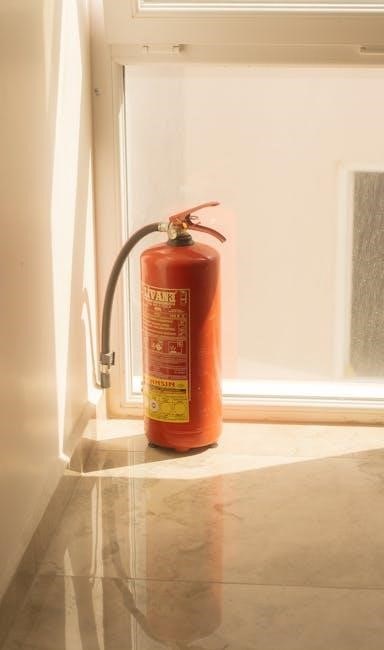
CO2 extinguishers displace oxygen, effectively smothering flames, and are ideal for electrical fires due to their non-conductive nature and residue-free discharge․
How CO2 Extinguishers Operate
Carbon dioxide extinguishers function by reducing the oxygen concentration surrounding the fire, effectively suffocating the combustion process․ Unlike water or foam, CO2 is a gaseous agent that doesn’t leave a residue, making it suitable for sensitive electronic equipment․ When activated, the pressurized CO2 is expelled, rapidly cooling the fuel and displacing the oxygen needed to sustain the flames․
The extinguisher contains liquid CO2, which vaporizes upon release due to the pressure drop, creating a dense, non-flammable cloud․ This cloud blankets the fire, cutting off the oxygen supply․ It’s important to note that CO2 extinguishers are most effective in enclosed spaces, as the gas dissipates quickly in open areas, reducing its smothering capability․ Proper training is essential for safe and effective operation․
Class B & C Fires and CO2 Extinguishers
CO2 extinguishers excel at tackling Class B fires – those involving flammable liquids like gasoline, oil, and grease – by smothering the source and inhibiting reignition․ They are also highly effective on Class C fires, which involve energized electrical equipment, due to CO2 being a non-conductive agent․ This eliminates the risk of electrical shock during fire suppression․
However, CO2 isn’t suitable for Class A fires (ordinary combustibles) as it doesn’t cool the material sufficiently to prevent re-flaming․ Because CO2 displaces oxygen, use in confined spaces requires caution․ Always ensure adequate ventilation after discharge to avoid asphyxiation hazards․ Their clean extinguishing properties make them ideal for protecting valuable equipment․
CO2 Extinguisher Safety Considerations
Carbon dioxide extinguishers, while effective, demand careful handling․ Due to CO2 displacing oxygen, use in enclosed or poorly ventilated spaces poses a significant asphyxiation risk; always ensure proper ventilation post-discharge․ The discharge horn gets extremely cold during use, potentially causing frostbite upon contact – avoid touching it directly․
CO2 extinguishers lack a visible flame, making it difficult to assess fire suppression effectiveness․ Direct the nozzle at the base of the flames, sweeping from side to side․ Remember CO2 is not effective on Class A fires․ Regular inspection for pressure levels and nozzle obstructions is vital for reliable operation and user safety․
Specialty Fire Extinguishers
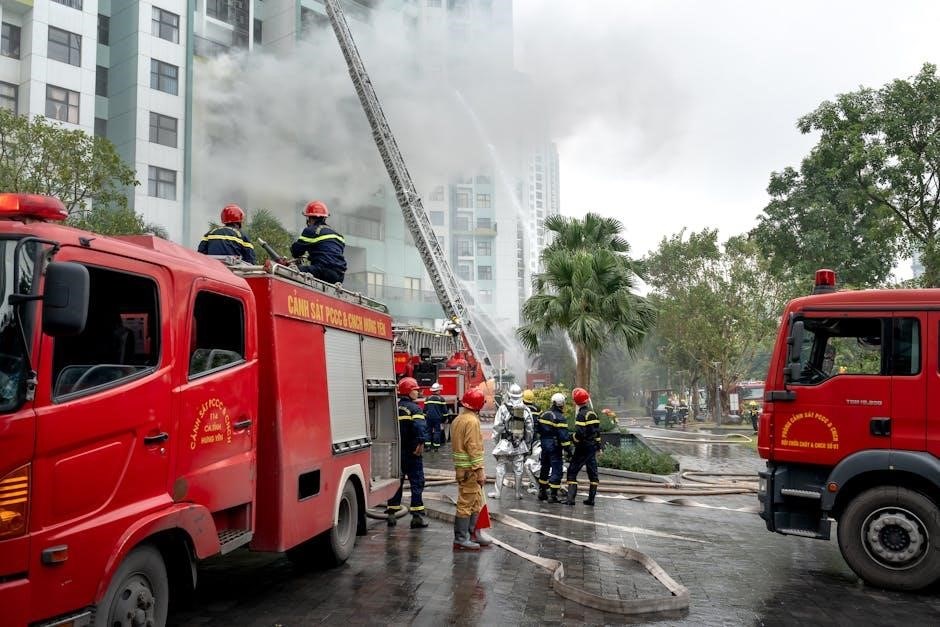
Specialty extinguishers target unique fire hazards, including flammable metals (Class D) and kitchen grease (Class K), requiring specific agents for safe and effective suppression․
Class D Fire Extinguishers (for Metal Fires)
Class D fires involve combustible metals like magnesium, titanium, zirconium, sodium, and potassium – substances that react violently with common extinguishing agents․ Standard extinguishers can worsen these fires, creating explosive reactions․ Therefore, Class D extinguishers utilize specialized dry powder agents specifically designed to smother these metal fires․
These dry powders work by creating a crust over the metal, excluding oxygen and dissipating heat․ Different metal fires require different dry powder compositions; it’s crucial to select an agent compatible with the specific metal involved․ Applying these extinguishers requires a gentle sweeping motion to avoid scattering the burning metal and reigniting the fire․ Water, CO2, and standard dry chemical extinguishers are ineffective and dangerous for Class D fires․
Class K Fire Extinguishers (for Kitchen Fires)
Class K fires originate from cooking oils and fats – typically found in commercial kitchens, but also present in homes․ These fires burn at extremely high temperatures and water can cause a dangerous splatter, spreading the fire rapidly․ Class K extinguishers employ a wet chemical agent, usually potassium acetate, potassium citrate, or potassium carbonate․
This agent saponifies the burning oil, forming a soapy foam blanket that cools the oil and prevents reignition․ Unlike other extinguishers, Class K agents are specifically formulated for high-temperature oil fires․ They effectively cool the fuel below its auto-ignition temperature․ Proper application involves gently covering the entire burning surface, avoiding splashing․ Using the incorrect extinguisher on a Class K fire can be incredibly hazardous․
Wet Chemical Extinguishers
Wet chemical extinguishers are primarily designed for Class K fires – those involving cooking oils and fats – but some are also effective on Class A fires․ They utilize a special potassium-based agent that creates a soapy foam, effectively cooling and smothering the fire․ This saponification process transforms the burning oil into a non-combustible substance․
Unlike water, wet chemical agents don’t cause dangerous splatter when applied to hot oils․ They offer superior performance in commercial kitchens and are increasingly recommended for home use where deep frying occurs․ These extinguishers are particularly effective because they cool the fuel below its ignition temperature and prevent re-ignition․ Proper training is essential for effective use․

Fire Extinguisher Inspection and Maintenance
Regular inspections – monthly visual checks and annual professional servicing – are vital to ensure extinguishers are fully operational and ready for immediate use․
Monthly Visual Inspections
Consistent monthly visual inspections are a cornerstone of fire safety preparedness․ These checks don’t require specialized training, but diligent attention to detail is essential․ Verify the extinguisher is in its designated location, easily accessible, and not obstructed by storage or other items․ Confirm the pressure gauge indicates the extinguisher is adequately charged – typically within the green zone․
Inspect the nozzle and hose for any signs of damage, cracks, or obstructions․ Examine the body of the extinguisher for dents, corrosion, or chemical residue․ Ensure the tamper seal is intact, indicating the extinguisher hasn’t been used or tampered with․ Document each inspection date and any findings; this record demonstrates proactive safety measures․ Addressing minor issues promptly prevents potential failures during an emergency․
Annual Professional Maintenance
Comprehensive annual maintenance, performed by a qualified fire protection professional, is vital for ensuring extinguisher reliability․ This goes beyond visual checks, involving a thorough internal examination․ Technicians will typically hydrostatically test the extinguisher’s cylinder to verify its structural integrity and recharge it with the appropriate extinguishing agent․
They’ll also inspect and replace any worn or damaged components, such as hoses, nozzles, and O-rings․ A detailed inspection report will document the maintenance performed, any deficiencies found, and corrective actions taken․ Maintaining records of these professional services is crucial for compliance with safety regulations and demonstrates a commitment to fire safety․ This proactive approach maximizes the extinguisher’s effectiveness when needed․
Using a Fire Extinguisher: The PASS Method
Remember PASS: Pull the pin, Aim at the fire’s base, Squeeze the handle, and Sweep from side to side for effective suppression․
Pull, Aim, Squeeze, Sweep
The PASS acronym is your guide to operating a fire extinguisher effectively․ Pull the pin, breaking the tamper seal, is the initial step, allowing you to discharge the extinguishing agent․ Aim low, directing the nozzle at the base of the flames – not at the smoke or the flames themselves․
Squeeze the handle slowly and evenly, releasing the extinguishing agent․ Maintaining a firm, consistent squeeze ensures a steady stream․ Finally, Sweep from side to side, covering the burning material until the fire appears to be out․ Continue sweeping even after the flames are extinguished to prevent re-ignition․ Remember to back away as the fire diminishes, maintaining a safe distance․
Safety Precautions When Using an Extinguisher
Prioritize personal safety when confronting a fire․ Ensure a clear escape route before attempting to extinguish the flames; never let the fire block your exit․ Be aware of potential hazards like toxic smoke and falling debris․ Maintain a safe distance – typically 6-8 feet – from the fire․
Never fight a fire that is spreading rapidly, is too large, or is producing heavy smoke․ In such cases, evacuate immediately and call emergency services․ Always have someone call 911 while you attempt to use the extinguisher․ Understand the limitations of your extinguisher type and only use it on appropriate fires․ After use, even if partially discharged, have the extinguisher professionally inspected and recharged․

Fire Extinguisher Placement and Accessibility
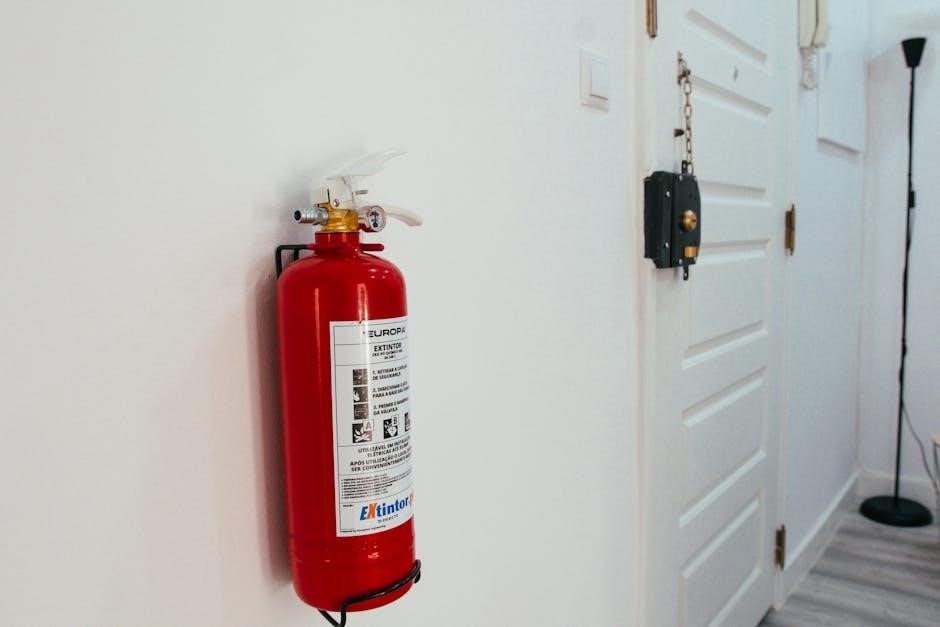
Strategic placement is vital for quick access during emergencies; extinguishers should be readily available in high-risk areas, clearly visible, and unobstructed․
Strategic Placement in Buildings
Effective fire extinguisher placement demands careful consideration of potential fire hazards within a building․ High-risk areas, such as kitchens, laboratories, workshops, electrical rooms, and near flammable materials, require extinguishers readily available․ Corridors and exit routes should also feature extinguishers, ensuring accessibility during evacuation․
Mount extinguishers on walls using appropriate brackets, maintaining clear visibility and avoiding obstructions․ Consider the type of extinguisher needed for the specific hazard; for example, a Class K extinguisher is essential in kitchens․ Regularly review placement based on changes in building layout or processes․ Prioritize locations easily reached by personnel without needing to climb or move obstacles, maximizing response time and safety․
Ensuring Easy Access
Maintaining unobstructed access to fire extinguishers is vital for a swift response during emergencies․ Extinguishers should never be blocked by furniture, equipment, or stored items․ Clear signage indicating extinguisher locations is crucial, especially in large or complex buildings․ Ensure staff are aware of these locations through training and regular drills․
Extinguishers must be mounted at a consistent height, typically between 3․5 and 5 feet from the floor, accommodating a wide range of users․ Regularly inspect mounting brackets for security and stability․ Avoid placing extinguishers in areas prone to extreme temperatures or humidity, which could affect their functionality․ Prioritize quick and unimpeded retrieval, potentially saving lives and minimizing property damage․
Regulations and Standards
NFPA 10 provides comprehensive guidelines for fire extinguisher selection, installation, inspection, and maintenance, while OSHA mandates workplace fire safety protocols․
NFPA 10 Standard
NFPA 10, the Standard for Portable Fire Extinguishers, is a widely adopted and crucial document outlining the requirements for portable fire extinguishers․ It details everything from the selection process – matching extinguisher type to potential fire hazards – to proper installation, inspection, maintenance, and testing procedures․
This standard covers the various classes of fires (A, B, C, D, and K) and specifies the appropriate extinguishing agents for each․ It also addresses factors like extinguisher size, placement based on travel distance, and the necessary training for personnel expected to use them․
Regular inspections, as defined by NFPA 10, are vital to ensure extinguishers are readily available and in working order, contributing significantly to overall fire safety within a facility․ Adherence to this standard is often legally mandated and is considered best practice․
OSHA Requirements
OSHA (Occupational Safety and Health Administration) mandates specific requirements for fire extinguishers in the workplace to protect employees․ These regulations, found in 29 CFR 1910․157, cover aspects like proper selection, distribution, and maintenance of fire extinguishers based on the hazards present․
Employers must ensure extinguishers are readily accessible, visible, and that employees are trained on their proper use․ This training includes understanding fire classes, extinguisher operation (the PASS method), and potential hazards associated with misuse․
Regular inspections and maintenance, documented according to OSHA standards, are also crucial․ Failure to comply with these requirements can result in citations and penalties, emphasizing the importance of proactive fire safety measures․